Free On-Site or Photo EstimateWritten Quote in 24 HoursPatch Repairs $300-$600
Parging Richmond
Foundation parging repair and recoating for one of the Ottawa area’s oldest villages.
Get my 24-hour quote
Tell us your Richmond address.
Service availability is confirmed for each request.
Local factors we plan around
Founded in 1818
Richmond is one of the oldest settlements in the Ottawa area, originally established as a military settlement.
Historic village core
Some of the area's oldest foundations sit alongside newer rural-edge construction.
Rural southwest setting
Richmond sits in Ottawa's rural southwest, with a mix of village and country properties.
Recent project
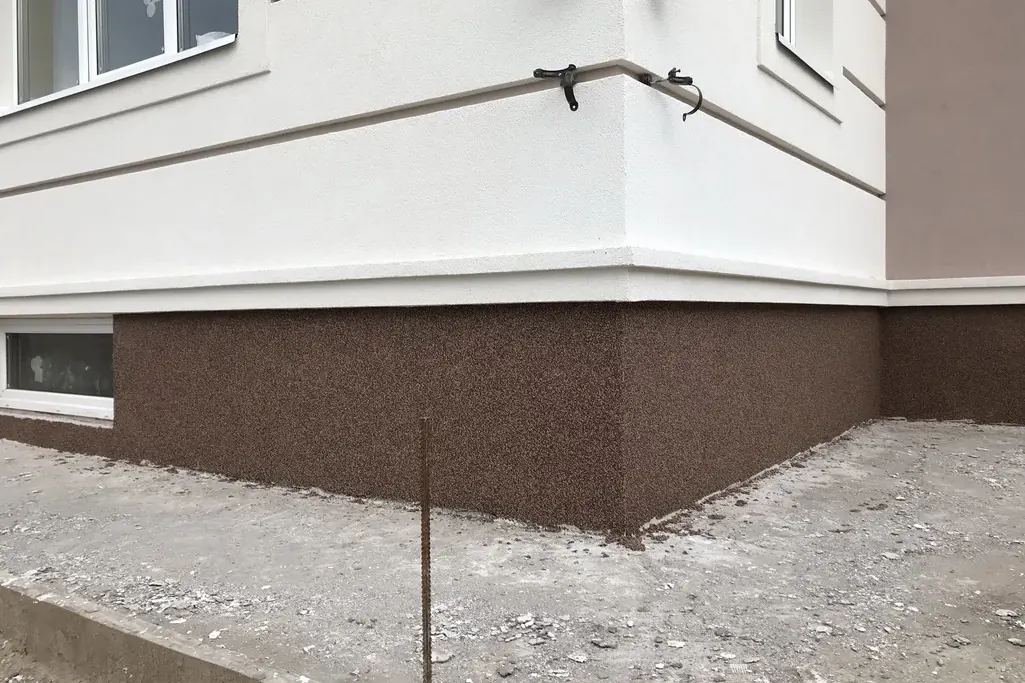
Speckled finish wrapped around a foundation corner
A brown, speckled textured finish wraps around this foundation corner under the white upper wall, with the walkway base still being prepared. Richmond has old stone walls in the village core and newer homes on its rural edge, and each gets a finish suited to the wall underneath.
Parging in Richmond, one of the region's oldest villages
Ottawa Parging Experts works across Richmond, founded in 1818 as a military settlement and one of the oldest communities in the greater Ottawa area. That long history means Richmond's village core includes some genuinely old foundations alongside newer construction on the surrounding rural edge – a wider age range than most Ottawa neighbourhoods carry.
We treat every Richmond inspection individually, since for parging a foundation's actual age and condition matter far more than the general age of the surrounding village.
The oldest walls in the village core were often built from local stone bedded in lime mortar, a system designed to let moisture move through and evaporate. Later village infill tends toward concrete block, and the newer construction on the village edge is poured concrete. Each of those wants a different coat. Stone tolerates a soft, permeable finish; block needs a coat that can carry across mortar joints without telegraphing every one of them; poured concrete needs clean, sound preparation because the coat is held on by bond alone.
What we plan around on Richmond parging jobs
Richmond's rural southwest setting means some properties have longer driveways and more site to walk during inspection than a tight village lot.
Water is the other Richmond variable. The village sits in low country along the Jock River, and properties on the lower ground can carry a higher water table and slower spring drainage than the surrounding fields. Add Leda clay, a sensitive marine clay left by the Champlain Sea, across parts of the Ottawa area, and you get walls that stay wet well into the season and ground that shifts as it dries and rewets. A wall in that condition is a candidate for flexible acrylic parging rather than the polymer-modified, fibre-reinforced cement mix, because acrylic keeps working on a surface that stays damp or moves slightly.
Village-lot access can be surprisingly tight for a rural community. Older properties were laid out before driveways were standard, so side yards are narrow, outbuildings sit close to the house, and staging for mixing sometimes has to go out front. Rural-edge properties have the opposite issue: plenty of room, but longer lanes that soften in spring.
Book a parging inspection in Richmond
Whether your property sits in Richmond's historic village core, founded back in 1818, or on the surrounding rural edge, tell us your address and what you're seeing and we'll confirm coverage and schedule a free inspection. Older village-area foundations get the same careful, honest assessment as any other property – repair where it holds, full recoat where it's genuinely needed.
Mention any heritage exterior details on your property when you book so we can plan the visit with those in mind.
Common parging problems on Richmond foundations
The failure we see most often on genuinely old walls is a modern cement coat applied over a lime-bedded stone foundation. The new coat is harder and far less permeable than what is behind it, so moisture that used to evaporate through the wall gets trapped, and the coat lifts off in plates while the stone and mortar underneath stay saturated. It looks like a bonding failure. It is really a moisture failure, and repeating the same repair produces the same result.
Second is deterioration in the 12 to 18 inches above grade splash zone, which is the most common failure point on any foundation and gets worse where roof water discharges close to the wall. Third is winter road and walkway salt, which attacks the surface of a coat and then the mortar behind it once the coat opens up. This climate brings dozens of freeze-thaw cycles a year, and each one drives water a little deeper into whatever is already cracked.
What can wait: a shallow surface blemish, or a hairline that stays tight through a full wet-dry cycle. What should not wait: any place where you can see stone, mortar joints or aggregate, or where you can push loose material off with a thumb, because at that stage water is working directly on the wall over winter rather than on the coating that was meant to take it.
Repair scope sets the price. A patch is $300 to $600, a moderate repair $600 to $1,500, an extensive repair or full recoat $1,500 to $6,000, and a full perimeter recoat or new application $15 to $30 per linear foot, roughly $2,250 to $4,500 on a typical 150 linear foot home. Estimates are free, on site or by photo, with a written quote within 24 hours, and a sound coat should give roughly 10 to 25 years.
You can compare those ranges with the full breakdown on our parging cost page. We also work in nearby Munster and Barrhaven.
Local questions
Do you serve Richmond?
Yes, including the historic village core and surrounding rural properties – tell us your address and we'll confirm.
Does an older Richmond home need special handling?
We assess older Richmond foundations the same careful way we assess any aging structure – a free inspection tells us whether repair or a full recoat fits.
Get my 24-hour quote
Free on-site or photo estimate, written quote within 24 hours.
To provide the best experiences, we use technologies like cookies to store and/or access device information. Consenting to these technologies will allow us to process data such as browsing behaviour or unique IDs on this site. Not consenting or withdrawing consent, may adversely affect certain features and functions.
Functional
Always active
The technical storage or access is strictly necessary for the legitimate purpose of enabling the use of a specific service explicitly requested by the subscriber or user, or for the sole purpose of carrying out the transmission of a communication over an electronic communications network.
Preferences
The technical storage or access is necessary for the legitimate purpose of storing preferences that are not requested by the subscriber or user.
Statistics
The technical storage or access that is used exclusively for statistical purposes.The technical storage or access that is used exclusively for anonymous statistical purposes. Without a subpoena, voluntary compliance on the part of your Internet Service Provider, or additional records from a third party, information stored or retrieved for this purpose alone cannot usually be used to identify you.
Marketing
The technical storage or access is required to create user profiles to send advertising, or to track the user on a website or across several websites for similar marketing purposes.