Free On-Site or Photo EstimateWritten Quote in 24 HoursPatch Repairs $300-$600
Parging Chesterville
Foundation parging repair and recoating for Chesterville village homes and North Dundas farm properties.
Get my 24-hour quote
Tell us your Chesterville or North Dundas address and what the wall looks like at the base.
Service availability is confirmed for each request.
Chesterville conditions that shape a parging job
A village built on the South Nation
The older streets near the river carry nineteenth-century brick and frame houses on rubble stone or early concrete walls, which behave nothing like a modern poured foundation under a parge coat.
Farm lots on the concession roads
Outside the village, long lanes, gravel pads, and outbuildings mean grade is often higher against the wall than it should be, which buries the splash zone and keeps the coating wet.
About an hour south of Ottawa
Chesterville sits well down Highway 31 and County Road 43, so we book it as a planned visit and a photo estimate is often the fastest route to a written number.
Recent project
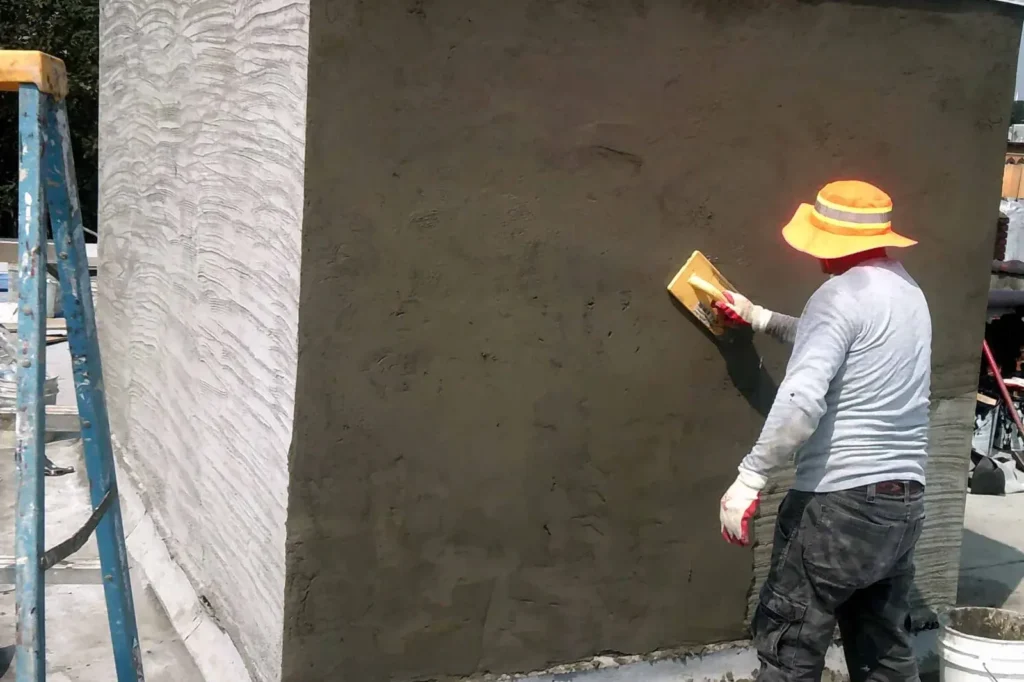
Finishing a fresh cement coat with a sponge float
A worker finishes a fresh cement coat with a sponge float, leaving an even surface across the whole wall. Chesterville’s older streets near the river have brick and frame houses on rubble stone foundations, where a well-finished coat keeps water out of the old joints.
Parging in Chesterville, a mill village on the South Nation River
Ottawa Parging Experts covers Chesterville and the surrounding North Dundas countryside, where a parging quote has to account for a housing stock that spans roughly a century and a half. Chesterville grew up around water power on the South Nation River and later around dairy processing, and the older streets close to the river still carry brick and frame houses from the nineteenth century sitting on rubble stone or early concrete foundations. Those walls need a very different approach than a 1990s poured wall on a country severance out on the concession roads.
Chesterville sits about an hour south of downtown Ottawa. Most people get there down Bank Street and Highway 31 through Metcalfe and Winchester, or across from the 417 through Casselman and Crysler. That distance shapes how we work: Chesterville visits get booked as planned trips rather than same-afternoon drop-ins, and a good set of photos will often get you a written number faster than waiting for a site visit.
The village core has small lots, short front setbacks, and mature trees close to the walls. Step outside it and you are on farm properties with long gravel lanes, hedgerows, and outbuildings. Both patterns are normal for us, and both change how a job gets staged.
What we plan around on Chesterville parging jobs
The single biggest variable here is what the foundation is actually made of. A fieldstone or rubble wall moves seasonally and holds moisture in a way poured concrete does not, and a hard, rigid cement coat troweled straight over old stone tends to let go in sheets within a handful of winters. On those older village walls we assess whether a flexible acrylic parging is the more honest answer, particularly on the north and east elevations that stay shaded and damp well into spring.
Post-war bungalows and the 1970s through 1990s builds around the village are usually concrete block or poured concrete, and there the failure mode is the ordinary one. The bottom 12 to 18 inches above grade is where snow banks up against the wall, melts in a February thaw, soaks into the coating, and freezes again overnight. That band is where nearly every parging failure in this region starts, and it is the first thing we look at.
Grade and drainage matter more on rural lots than most owners expect. Where a lane, a gravel parking pad, or forty years of added topsoil and flower beds have raised the ground against the foundation, the splash zone is buried and the wall never really dries. We say so plainly during the inspection, because recoating over an unsolved drainage problem is money spent twice.
Parging needs above-freezing temperatures to cure properly, so Chesterville work runs through the frost-free season, roughly late April to early October. If you call in November, we will normally tell you to protect the wall over winter and book early in the spring rather than rush a coat that will not set.
Book a parging inspection in Chesterville
Send your Chesterville or North Dundas address along with a few photos of the wall, taken straight on and again from a low angle so the base of the foundation is visible. We will tell you whether you are looking at a patch repair, a moderate repair, or a full recoat, and you get a written quote within 24 hours.
If the damage is confined to one corner and the rest of the coat is bonded and sound, we will say that instead of quoting the whole perimeter. Sometimes the right advice for an old village house is to watch a hairline crack for another season and spend the money on eavestrough extensions first.
Our parging cost guide explains what moves a quote up or down.
Chesterville parging questions
Our village house sits on an old rubble stone wall – can that even hold a parge coat?
Usually yes, but not with a hard rigid mix. Stone and lime-bedded walls move and breathe, so a stiff cement coat tends to release in sheets after a few winters. On those walls we look at a flexible acrylic parging instead, especially where the base stays damp into June.
Is parging a barn-side or back wall nobody sees actually worth doing on a Dundas County property?
Only if the concrete underneath is being lost. Parging is a sacrificial protective coat, so a cosmetically ugly but intact wall on a back elevation can often wait. If the concrete or block behind it is spalling or the mortar joints are opening, waiting costs more than fixing it.
Does being outside Ottawa city limits change the freeze-thaw damage we should expect?
No. Ottawa winters bring cold snaps below -20C, and Chesterville is inland farm country a short drive south, so it gains nothing from being outside the boundary. This market goes through dozens of freeze-thaw cycles per year.
Get my 24-hour quote
Free on-site or photo estimate, written quote within 24 hours.
To provide the best experiences, we use technologies like cookies to store and/or access device information. Consenting to these technologies will allow us to process data such as browsing behaviour or unique IDs on this site. Not consenting or withdrawing consent, may adversely affect certain features and functions.
Functional
Always active
The technical storage or access is strictly necessary for the legitimate purpose of enabling the use of a specific service explicitly requested by the subscriber or user, or for the sole purpose of carrying out the transmission of a communication over an electronic communications network.
Preferences
The technical storage or access is necessary for the legitimate purpose of storing preferences that are not requested by the subscriber or user.
Statistics
The technical storage or access that is used exclusively for statistical purposes.The technical storage or access that is used exclusively for anonymous statistical purposes. Without a subpoena, voluntary compliance on the part of your Internet Service Provider, or additional records from a third party, information stored or retrieved for this purpose alone cannot usually be used to identify you.
Marketing
The technical storage or access is required to create user profiles to send advertising, or to track the user on a website or across several websites for similar marketing purposes.