Free On-Site or Photo EstimateWritten Quote in 24 HoursPatch Repairs $300-$600
Parging Kars
Foundation parging repair and recoating for Kars, a small village on the Rideau River.
Get my 24-hour quote
Tell us your Kars address.
Service availability is confirmed for each request.
Local factors we plan around
Rideau River village
Kars sits directly on the Rideau River in Ottawa's rural south, similar in setting to nearby Manotick.
Small, established community
A mix of older village homes and newer riverside construction.
Riverside drainage conditions
Waterfront properties get extra attention to grading and moisture exposure.
Recent project
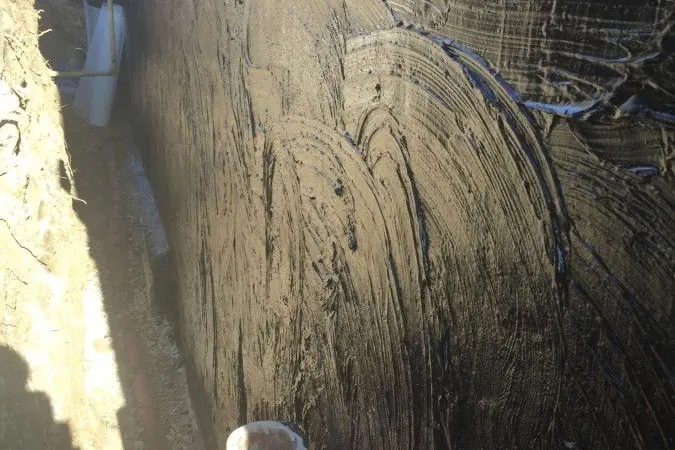
Waterproof coat on an excavated foundation
With a trench dug along the wall, a black waterproof coat is brushed onto the foundation below the brick, with a drain pipe beside it in the trench. Kars sits right on the Rideau River, where riverside lots carry more ground moisture against the foundation.
Parging in Kars, a small village on the Rideau River
Ottawa Parging Experts works across Kars, a small village directly on the Rideau River in Ottawa's rural south, similar in setting to nearby Manotick. The community mixes older, established village homes with newer construction along the riverfront, giving Kars a wider range of parging ages than a single-era subdivision would carry.
Riverside properties in Kars get a closer look at grading and moisture exposure during inspection, since low-lying waterfront lots handle drainage differently than higher ground further from the water – a factor we weigh alongside standard crack and coating assessment.
That mix of eras also means a mix of wall types. Older village houses are more likely to sit on stone or block, where a parge coat spans mortar joints and any movement below shows up as a stepped crack following those joints. Newer riverside builds are poured concrete, often with a walkout or a partly exposed lower level facing the water, which leaves far more wall surface above grade than a standard village lot and puts more of it in weather.
What we plan around on Kars parging jobs
Kars' small size and rural setting mean confirming your specific location when you request a quote helps us plan an efficient visit.
Proximity to the Rideau changes the moisture story in a way that shows up directly in the coating. Lots close to the water tend to carry a higher water table, and soils near the bank are often looser river-deposited material while ground further back runs to heavier clay, including Leda clay, a sensitive marine clay left by the Champlain Sea. A wall standing in ground that stays wet cannot dry between wettings, and parging only survives because it dries. Saturated material going into a freeze is what breaks the bond apart, and this climate brings dozens of freeze-thaw cycles a year.
Riverbank lots usually slope toward the water, which is good for shedding surface runoff and bad in one specific way: the downhill elevation is where roof water, yard water and sump discharge all end up, and that is where the 12 to 18 inches above grade splash zone deteriorates first. We check where the sump line terminates before we quote anything, because a discharge pointed back at the foundation will undo a new coat.
Where a Kars wall stays damp or shows continuing seasonal movement, flexible acrylic parging is the more honest material choice than the polymer-modified, fibre-reinforced cement mix. Acrylic keeps its bond on a damp, slightly moving surface instead of cracking along the same line the following spring.
Book a parging inspection in Kars
Whether your property sits directly on the Rideau River or further back in the village, tell us your address and what you're seeing and we'll confirm coverage and schedule a free inspection or photo review. Riverside Kars properties get the same close look at grading and drainage that we apply to any waterfront site.
Given the community's small size, mentioning your specific location when you book helps us plan an efficient visit.
Timing a Kars parging job around the season
The material has to cure above freezing, which limits the work to the Ottawa frost-free season, about 160 days running roughly from late April to early October. On a riverside property there is a second constraint on top of that one. Ground near the Rideau is at its wettest in spring, and a saturated base of wall will not take a coat properly no matter what the air temperature is doing. Early spring in Kars often means waiting for the ground to give up its water before the lower part of the wall can be prepared.
That pushes the working window later than it would be on high, dry ground. Early summer through to early autumn is usually the most reliable stretch here, with enough warm days after application for the coat to gain strength before nights start dropping.
If a problem turns up late in the season, it is usually reasonable to leave it. January cold snaps can drop below -20C, and one winter of exposure on an otherwise sound wall is a manageable risk compared with placing a coat that cannot cure. In the meantime, extending a downspout, redirecting a sump line and clearing snow away from the failed area does more good than a rushed patch. Book the free on-site or photo estimate whenever you notice the problem, get the written quote within 24 hours, and schedule the work for the right conditions.
Our parging repair page explains how we decide between a patch and a larger repair. For a closer look at how quotes are built, see the parging cost page. Neighbouring North Gower is part of the same service area.
Local questions
Do you serve Kars?
Yes – tell us your address and we'll confirm.
Does a riverside Kars property need special attention?
Riverside properties get a closer look at grading and drainage as part of any inspection, since low-lying waterfront lots handle moisture differently than higher ground further from the river.
Get my 24-hour quote
Free on-site or photo estimate, written quote within 24 hours.
To provide the best experiences, we use technologies like cookies to store and/or access device information. Consenting to these technologies will allow us to process data such as browsing behaviour or unique IDs on this site. Not consenting or withdrawing consent, may adversely affect certain features and functions.
Functional
Always active
The technical storage or access is strictly necessary for the legitimate purpose of enabling the use of a specific service explicitly requested by the subscriber or user, or for the sole purpose of carrying out the transmission of a communication over an electronic communications network.
Preferences
The technical storage or access is necessary for the legitimate purpose of storing preferences that are not requested by the subscriber or user.
Statistics
The technical storage or access that is used exclusively for statistical purposes.The technical storage or access that is used exclusively for anonymous statistical purposes. Without a subpoena, voluntary compliance on the part of your Internet Service Provider, or additional records from a third party, information stored or retrieved for this purpose alone cannot usually be used to identify you.
Marketing
The technical storage or access is required to create user profiles to send advertising, or to track the user on a website or across several websites for similar marketing purposes.