Free On-Site or Photo EstimateWritten Quote in 24 HoursPatch Repairs $300-$600
Parging Rockland
Foundation parging repair and recoating for Rockland homes, from the old riverside village to the newer subdivisions south of Highway 174.
Get my 24-hour quote
Give us your Rockland address and what the bottom of the wall looks like.
Service availability is confirmed for each request.
Rockland conditions that shape a parging quote
Ottawa River terraces
Rockland sits on the south bank of the Ottawa River, on sandy terraces over the sensitive marine clay left by the Champlain Sea. Ground that wets and dries seasonally opens hairline cracks in a rigid parge coat.
Lumber-era village core
The oldest walls cluster near the river and the Laurier Street spine, dating to the sawmill decades before the 1920s. Many have been patched and recoated several times over a century.
Highway 174 commuter growth
Subdivisions built from the 1990s onward carry original parging that is now sitting right at the front of a 10 to 25 year lifespan, and homes fronting the highway take winter salt spray.
Recent project
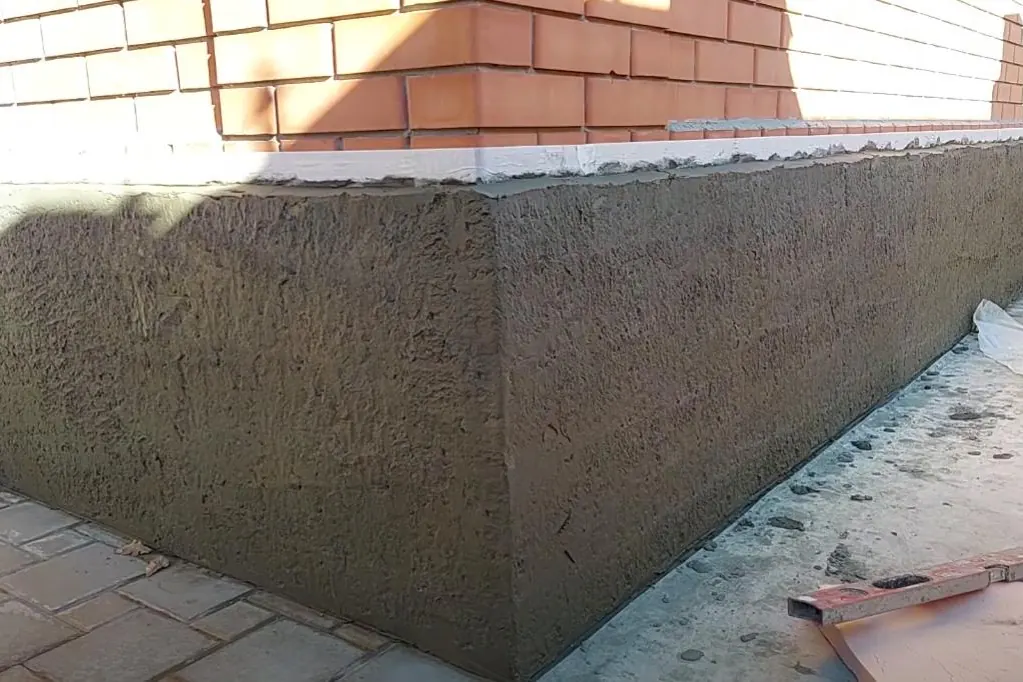
Textured parging on a foundation corner
A textured parge coat wraps cleanly around this foundation corner below the brick, with the paving already back in place. Rockland’s oldest houses sit close to the water, where the coat needs to be sound at every corner.
Parging in Rockland, a mill town turned river commuter suburb
Ottawa Parging Experts covers Rockland, the largest community in Clarence-Rockland and one of the closest Prescott-Russell towns to the capital, sitting on the south bank of the Ottawa River roughly 35 km east of downtown along Highway 174. Rockland grew up around lumber. A large sawmill operation on the river drew French-speaking workers through the second half of the 1800s, which is why the town has been solidly francophone ever since, and why its oldest housing sits close to the water and the old Laurier Street spine rather than spread across the plain behind it.
The mill era ended in the 1920s and the town spent decades as a modest local service centre before the highway turned it into a commuter address. From the 1990s onward Rockland added subdivision after subdivision on the higher ground south of the original core. The practical result for a parge coat is two very different populations of foundation wall inside one town: village walls that have been coated, patched and recoated repeatedly over a hundred years, and 1990s to 2010s builds whose first and only parging is now reaching the front end of a 10 to 25 year lifespan.
What we plan around on Rockland parging jobs
Rockland's ground is the reason we look at the bottom of the wall first. This stretch of the Ottawa River lowland is Champlain Sea country, sandy river terrace near the water over the sensitive marine clay known as Leda clay further back, and clay-influenced ground moves seasonally as it takes on and gives up moisture. That movement rarely breaks a foundation, but it does open hairline cracks in a rigid coating. Once water gets behind the coat, freezing does the rest. The local count runs to dozens of freeze-thaw cycles a year, and Ottawa sees cold snaps below -20C, mostly in January.
Nearly every failure we would expect to be called about in Rockland starts in the same 12 to 18 inches above grade. That splash zone takes roof runoff, snow piled off the driveway, and on properties fronting the highway or the old county road alignment, salt spray thrown off passing traffic all winter.
Where a wall stays damp or shows an active movement pattern, common on older riverside lots with mature trees and shallow grading, we would recommend flexible acrylic parging rather than a straight cement mix. On dry, stable walls we use polymer-modified, fibre-reinforced cement parging, which stands up better to impact and to snow-clearing abuse.
Access in Rockland is usually simple. Subdivision lots have paved drives and standard setbacks. Older village lots near the river can be narrow with fences tight to the wall, so we check side yard clearance before quoting a full perimeter.
Book a parging inspection in Rockland
Send us the address and what you are seeing and we will set up a free on-site look or review photos instead. Either way the written quote follows within 24 hours and says plainly whether you are looking at a patch, a section, or the whole perimeter. A small spot repair typically lands between $300 and $600, a moderate repair between $600 and $1,500, and extensive repair or a full recoat between $1,500 and $6,000. A full perimeter recoat or a new application is quoted at $15 to $30 per linear foot, which works out to roughly $2,250 to $4,500 on a typical 150 linear foot home.
Timing matters more here than the drive does. Parging needs above-freezing temperatures to cure, so the working season runs spring through fall, with an Ottawa frost-free window of about 160 days from roughly late April to early October. A hairline crack noticed in November can safely wait. A section that sounds hollow when tapped, or one shedding material into the garden bed, is worth looking at early in the season rather than late, because every winter that water sits behind loose parging takes more of the wall face with it.
The parging cost page covers what changes the price, from removal to access. Close by, we cover Cumberland and Sarsfield as well.
Rockland parging questions
Does Rockland's old riverside housing get treated differently than the newer streets south of the highway?
Usually yes. Century village walls are often rubble or early block with layers of old coating that have to come off before anything new goes on. Newer subdivision walls are poured concrete and normally need surface prep only.
Our Rockland house fronts Highway 174 and gets road spray all winter. Does that shorten the parging?
It shortens the splash zone specifically. Salt-laden slush accelerates surface scaling on cement coatings, so the lower 12 to 18 inches tends to fail years before the rest of the wall.
We are outside the serviced village toward Clarence Creek. Can you still quote that address?
Tell us the address when you request the quote and we will confirm coverage before anything is scheduled.
Get my 24-hour quote
Free on-site or photo estimate, written quote within 24 hours.
To provide the best experiences, we use technologies like cookies to store and/or access device information. Consenting to these technologies will allow us to process data such as browsing behaviour or unique IDs on this site. Not consenting or withdrawing consent, may adversely affect certain features and functions.
Functional
Always active
The technical storage or access is strictly necessary for the legitimate purpose of enabling the use of a specific service explicitly requested by the subscriber or user, or for the sole purpose of carrying out the transmission of a communication over an electronic communications network.
Preferences
The technical storage or access is necessary for the legitimate purpose of storing preferences that are not requested by the subscriber or user.
Statistics
The technical storage or access that is used exclusively for statistical purposes.The technical storage or access that is used exclusively for anonymous statistical purposes. Without a subpoena, voluntary compliance on the part of your Internet Service Provider, or additional records from a third party, information stored or retrieved for this purpose alone cannot usually be used to identify you.
Marketing
The technical storage or access is required to create user profiles to send advertising, or to track the user on a website or across several websites for similar marketing purposes.