Free On-Site or Photo EstimateWritten Quote in 24 HoursPatch Repairs $300-$600
Parging Vanier
Foundation parging repair and recoating for Vanier’s established inner-city homes.
Get my 24-hour quote
Tell us your Vanier address.
Service availability is confirmed for each request.
Local factors we plan around
One of Ottawa's older neighbourhoods
Vanier's housing dates largely to the early-to-mid 20th century, well past a typical parging replacement window.
Mixed foundation types
Older Vanier streets mix poured concrete, block and some rubble stone, and parging fails differently on each.
Tight urban lots
Narrower inner-city lots mean access planning matters more here than in newer suburbs.
Recent project
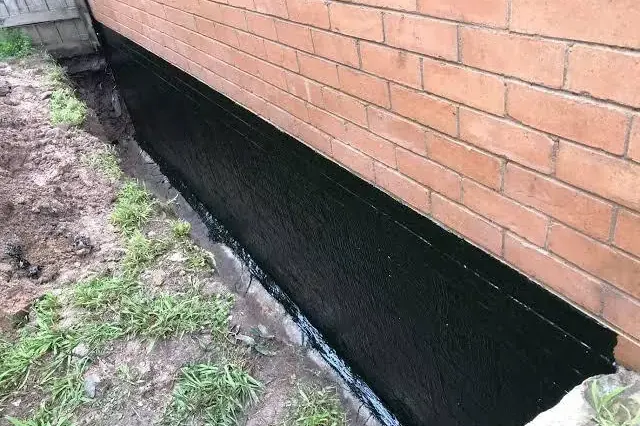
Black waterproof coating below a brick wall
The exposed foundation below this brick wall has a fresh black waterproof coating, carried down to the soil line along the base. Decades of gardens and walkways rebuilt against Vanier’s older walls raise the soil line, so the base of the foundation is where problems start.
Parging in Vanier, one of Ottawa's oldest neighbourhoods
Ottawa Parging Experts works across Vanier, a historically significant French-Canadian neighbourhood close to Ottawa's core, with housing stock dating largely to the early-to-mid 20th century. That age profile means a large share of Vanier's original parging is well past a typical 10 to 25 year lifespan, which is why full recoats come up more often here than in Ottawa's newer suburbs.
Housing from that period generally sits on poured concrete or concrete block, and on the oldest streets sometimes on rubble stone laid up with lime mortar. Parging fails differently on each. Over block, the coat bridges every mortar joint, so movement in one joint telegraphs through as a straight hairline crack. Over poured concrete the coat relies on adhesion alone, and early failure shows up as hollow areas that sound drummy when tapped rather than as visible cracking. Over stone, the parge coat is often the only barrier between loose bedding mortar and running water.
What we plan around on Vanier parging jobs
Vanier's narrower inner-city lots and closer building spacing mean access planning matters more here than on a wide suburban driveway – we scope that during your free inspection.
Grade is the quieter problem on these streets. After decades of gardens, walkways and interlock being rebuilt against the same wall, soil tends to creep upward, and the 12 to 18 inches above grade splash zone that normally takes the worst of the wear ends up partly buried. Buried parging cannot dry out between wettings, so it enters every freeze saturated. This climate brings dozens of freeze-thaw cycles a year, and a coat held permanently damp takes every one of them. We measure exposed wall height before quoting, because dropping grade a few inches is sometimes the difference between a coat that lasts and one you pay for twice.
Much of the Ottawa area sits on Leda clay, a sensitive marine clay left by the Champlain Sea. Clay soils shrink through a dry August and swell again with autumn rain, and that seasonal cycle moves older shallow footings slightly. Where a Vanier wall is still moving, or where a shaded section stays damp through the season, we use flexible acrylic parging rather than the polymer-modified, fibre-reinforced cement mix, since acrylic tolerates movement without splitting straight back open.
Equipment access is a genuine constraint here rather than a formality. Mixing needs a flat staging spot, a water source and room to move tubs along the wall. On a shared driveway or a narrow side yard that staging usually has to happen out front, so describing the layout in advance keeps the visit short.
Book a parging inspection in Vanier
Given how many Vanier homes are carrying original or long-overdue parging, a free inspection is worth booking even if nothing looks obviously wrong from the sidewalk – early-stage failure on an older coat isn't always visible until you look closely. Tell us your address and what you're seeing, and we'll confirm coverage and schedule a visit.
Given Vanier's tighter urban lots, mentioning any specific access constraints (shared driveways, narrow side yards) when you book helps us plan the visit efficiently.
Common parging problems on Vanier foundations
Three patterns turn up repeatedly on older inner-city walls. The first is a drummy band right at the splash zone, where the coat has released from the wall behind it but has not fallen away yet. The second is a hard cement patch placed over a softer original coat, which sheds in a sheet within a season or two because the two materials expand and contract at different rates. The third is step cracking on block, running diagonally along the mortar joints up from a corner, which points at movement below rather than at the coating itself.
Some of this can wait. A tight hairline in an otherwise sound coat is not urgent and will usually hold through a season. What should not wait is exposed block, exposed aggregate or a hollow section at grade, because once water reaches the masonry directly it spends the winter working on the wall itself instead of on a sacrificial coat.
Cost follows scope rather than postal code. A localised patch runs $300 to $600, a moderate repair $600 to $1,500, and an extensive repair or full recoat $1,500 to $6,000. A full perimeter recoat or new application is priced at $15 to $30 per linear foot, roughly $2,250 to $4,500 on a typical 150 linear foot home. Estimates are free, on-site or by photo, with a written quote within 24 hours.
Yes, across Vanier's residential streets – tell us your address and we'll confirm.
My Vanier home is quite old – what should I expect?
Many Vanier homes are carrying original or long-overdue parging, so a full recoat is common here rather than a small patch repair. A free inspection will tell you which one your home actually needs.
Get my 24-hour quote
Free on-site or photo estimate, written quote within 24 hours.
To provide the best experiences, we use technologies like cookies to store and/or access device information. Consenting to these technologies will allow us to process data such as browsing behaviour or unique IDs on this site. Not consenting or withdrawing consent, may adversely affect certain features and functions.
Functional
Always active
The technical storage or access is strictly necessary for the legitimate purpose of enabling the use of a specific service explicitly requested by the subscriber or user, or for the sole purpose of carrying out the transmission of a communication over an electronic communications network.
Preferences
The technical storage or access is necessary for the legitimate purpose of storing preferences that are not requested by the subscriber or user.
Statistics
The technical storage or access that is used exclusively for statistical purposes.The technical storage or access that is used exclusively for anonymous statistical purposes. Without a subpoena, voluntary compliance on the part of your Internet Service Provider, or additional records from a third party, information stored or retrieved for this purpose alone cannot usually be used to identify you.
Marketing
The technical storage or access is required to create user profiles to send advertising, or to track the user on a website or across several websites for similar marketing purposes.