Parging Cracking or Falling Off? What to Check Before You Repair It
If the parging on your foundation is cracking, separating, or starting to fall off, don’t assume the foundation itself is damaged. Use this checklist from Ottawa Parging Experts before you book a repair.
Parging is a thin protective coating applied over exposed concrete, concrete block, masonry, or other foundation surfaces. It can deteriorate from moisture, freeze-thaw cycles, salt exposure, poor adhesion, or simply age. In many cases, the parging can be repaired without major foundation work.
The important part is figuring out why the parging failed and what condition the surface underneath is in.
For Ottawa homes, that distinction matters. Our repeated freeze-thaw cycles, winter moisture, and exposure to road salt can be hard on exterior masonry finishes.
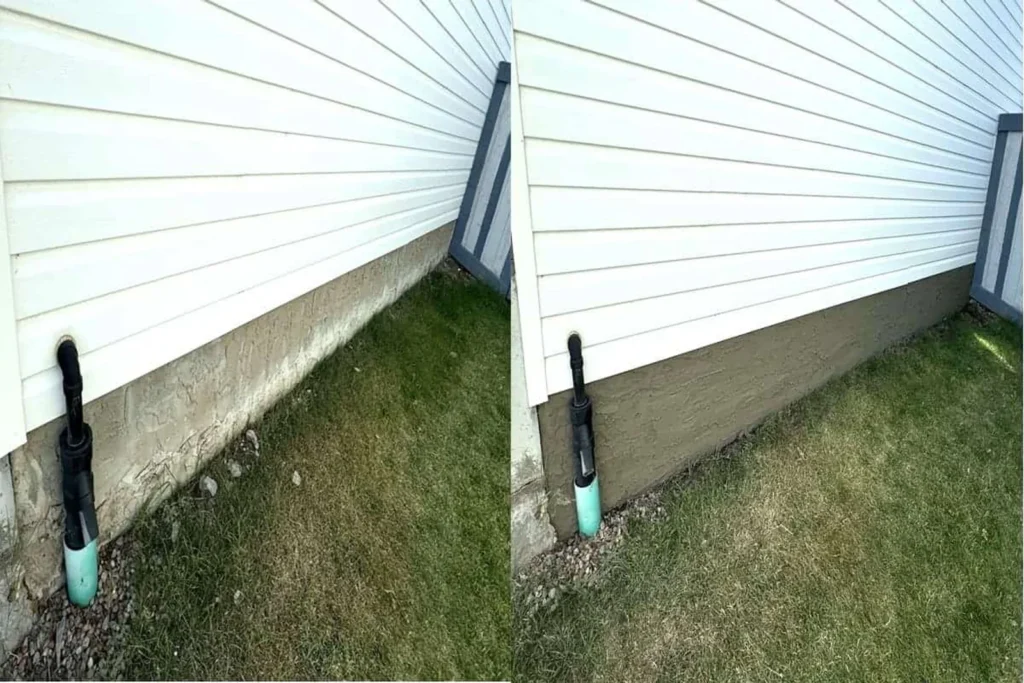
What Is Parging?
Parging is a thin cement-based or modified coating applied to a foundation wall or other masonry surface.
It can serve several purposes:
- Improve the appearance of exposed foundation walls
- Cover uneven concrete or block surfaces
- Provide a protective finish over masonry
- Help protect the surface from weather exposure
Parging is generally a non-structural coating. It does not replace the structural foundation wall behind it.
That means cracked or missing parging does not automatically mean there is a structural foundation problem. At the same time, removing damaged parging can sometimes reveal cracks, deteriorated concrete, moisture problems, or other conditions that should be investigated.
Why Does Foundation Parging Crack and Fall Off?
There is rarely one universal cause. The failure usually comes down to moisture, temperature changes, surface preparation, material selection, or a combination of these factors.
1. Freeze-thaw cycles
Ottawa’s winters can be particularly hard on exterior masonry.
Water can enter small cracks, pores, or gaps in the parging and underlying surface. When temperatures drop below freezing, that water freezes and expands. Repeated freezing and thawing can gradually weaken the bond between the parging and the surface underneath.
Over time, you may notice:
- Cracks
- Loose sections
- Flaking
- Pieces separating from the wall
- Areas where the coating has completely fallen away
Freeze-thaw damage is often progressive. A small damaged area may eventually become much larger if water continues to get behind or into the coating.
2. Water getting behind the parging
Moisture is one of the most common things to investigate when exterior parging repeatedly fails.
Water can reach the wall from several directions, including:
- Poor grading around the house
- Downspouts discharging too close to the foundation
- Leaking gutters
- Water collecting beside the foundation
- Cracks or gaps around penetrations
- Deteriorated parging or sealant
- Drainage problems
If water repeatedly reaches the back of the parging, the coating may lose its bond with the foundation surface.
Simply applying a new layer over the damaged area may not solve the problem if the source of the moisture remains.
3. Salt exposure
Winter salt and de-icing products can contribute to deterioration of masonry and concrete surfaces.
This is particularly relevant where driveways, sidewalks, roads, or walkways are close to exposed foundation walls.
Salt exposure does not mean every damaged section of parging was caused by salt. However, it is one factor worth considering when deterioration is concentrated near areas that receive regular winter de-icing products.
4. Poor bonding or surface preparation
Parging needs a suitable surface to bond to.
If the original surface was dirty, dusty, excessively smooth, unstable, or otherwise unsuitable, the new material may not adhere properly.
Previous repairs can also complicate things. If several layers of old coating have been applied over time, some areas may be firmly attached while others are weak or detached.
That is why simply adding another layer over everything is not always the right repair.
Does Cracked Parging Mean the Foundation Is Damaged?
Not necessarily.
Parging can crack or detach while the concrete or block underneath remains in reasonably good condition.
However, you should not use the condition of the parging alone to rule out an underlying problem.
When damaged parging is removed, a contractor should look at the exposed surface for things such as:
- Significant cracks in the foundation
- Deteriorated or soft concrete
- Damaged concrete blocks
- Missing mortar
- Areas where the masonry is breaking down
- Signs of persistent moisture
- Previous repairs that have failed
- Conditions that could cause the new parging to fail again
A superficial crack in the parging is very different from a substantial crack or deterioration in the foundation material itself.
If the underlying foundation has a significant crack, movement, structural deterioration, or active water problem, parging repair alone is not the solution.
Parging Damage vs. Concrete Spalling
These problems can look similar from a distance, but they are not the same thing.
Parging failure involves the protective coating separating, cracking, or falling away from the surface underneath.
Concrete spalling involves deterioration of the concrete itself. The concrete may crack, flake, or break away, sometimes exposing aggregate or reinforcement.
This distinction matters because replacing the parging will not repair deteriorated concrete underneath it.
If an area of parging has fallen off, the exposed foundation should be examined before deciding how much repair is actually required.
Should All the Old Parging Be Removed?
Not always.
If most of the existing parging is firmly attached and in good condition, there is little reason to remove sound material simply for the sake of doing a bigger job.
A proper repair may involve removing only:
- Loose or detached material
- Cracked sections that cannot be stabilized
- Weak or deteriorated areas
- Material that is preventing proper bonding
The remaining surface can then be cleaned and prepared before the repair material is applied.
On the other hand, if large portions are loose or the existing coating has widespread adhesion problems, more extensive removal may make sense.
The correct scope depends on what is actually attached to the wall, not simply how old the parging is.
Can You Repair Just One Section?
Yes, in many cases.
A localized repair can make sense when:
- The damaged area is relatively small
- The surrounding parging is firmly attached
- The underlying foundation is in good condition
- There is no obvious ongoing moisture problem
- The repair can be properly bonded to the existing surface
The main challenge is making the repaired area blend with the existing finish.
If the parging is failing across a large portion of the foundation, however, patching individual spots may only postpone a larger repair.
What Does a Proper Parging Repair Involve?
The exact process depends on the condition of the wall and the material being used, but a proper repair generally involves more than simply covering the damaged area.
Step 1: Inspect the existing surface
The first step is determining what has actually failed.
The contractor should identify loose material, cracks, areas of poor adhesion, moisture-related damage, and any visible problems with the underlying masonry.
Step 2: Remove loose or failed material
Anything that is no longer properly bonded should be removed.
Applying new parging over loose material leaves the underlying problem in place and can cause the new repair to fail with it.
Step 3: Prepare the surface
The exposed surface needs to be suitable for the new material.
Depending on the condition, preparation may include cleaning, removing dust and debris, repairing damaged masonry, and addressing conditions that could interfere with adhesion.
Step 4: Address the underlying problem
If water is reaching the wall because of drainage, grading, downspouts, or another identifiable issue, that should be addressed where practical.
Otherwise, the new parging may be exposed to the same conditions that caused the original failure.
Step 5: Apply the repair material
The appropriate material is then applied according to the requirements of the product and the condition of the substrate.
The repair may involve multiple coats or different preparation steps depending on the system being used.
Step 6: Cure and finish properly
Parging is not simply a matter of putting material on the wall and immediately exposing it to harsh weather.
Temperature, moisture, drying conditions, and the manufacturer’s application requirements can affect the finished repair.
For that reason, contractors should follow the requirements of the specific product they are using rather than relying on one universal curing rule for every parging material.
Cement Parging vs. Acrylic or Polymer-Modified Parging
There is no single material that is automatically right for every foundation.
Traditional cement-based parging remains a common choice for masonry and concrete surfaces. Acrylic and polymer-modified products can offer different properties, including improved adhesion, flexibility, or resistance to certain types of weather exposure depending on the specific formulation.
The important question is not simply whether a product is called “acrylic” or “polymer modified.”
The material needs to be compatible with:
- The existing substrate
- The existing coating
- The expected moisture conditions
- The desired finish
- The manufacturer’s application requirements
A contractor should be able to explain why a particular material is being recommended for your foundation, rather than presenting one product as universally superior.
Can Parging Be Repaired in the Winter?
Sometimes, but weather conditions matter.
Cement-based materials generally require appropriate temperatures and curing conditions. Cold temperatures can interfere with hydration and curing, while freezing conditions can damage a fresh repair.
Some specialized products and installation methods may allow work in colder conditions, but the requirements depend on the particular product.
If a contractor proposes winter parging work, ask:
- What product are you using?
- What temperature range does the manufacturer allow?
- How will the repair be protected while it cures?
- What happens if temperatures drop below the recommended range?
A reputable contractor should be able to answer those questions clearly.
Does Parging Stop Basement Leaks?
Usually, no.
Parging is primarily a surface coating. It should not be treated as a substitute for proper waterproofing or drainage.
If water is entering the basement through a foundation crack, joint, porous masonry, or another location, the appropriate solution depends on where the water is coming from and how it is entering.
Depending on the situation, the underlying problem could involve:
- Exterior drainage
- Foundation waterproofing
- A crack requiring repair
- Window or door openings
- Plumbing
- Grading
- Downspout discharge
- Hydrostatic pressure
Applying parging over the outside of a foundation may improve the condition of the surface, but it does not automatically make a foundation waterproof.
How Much Does Parging Repair Cost in Ottawa?
There is no reliable single price for parging repair without seeing the foundation.
The cost can vary considerably depending on:
- The size of the damaged area
- How much existing parging must be removed
- Whether the underlying concrete or block needs repair
- Accessibility around the foundation
- The height of the wall
- Surface preparation requirements
- The material being used
- Whether drainage or moisture issues need to be addressed
- Whether the job is a localized repair or a larger replacement
A small patch and a full foundation re-parging project are very different jobs.
Be cautious of an estimate that gives you a precise price without accounting for the condition of the existing surface. A contractor should be able to explain what is included in the scope and what conditions could change the price.
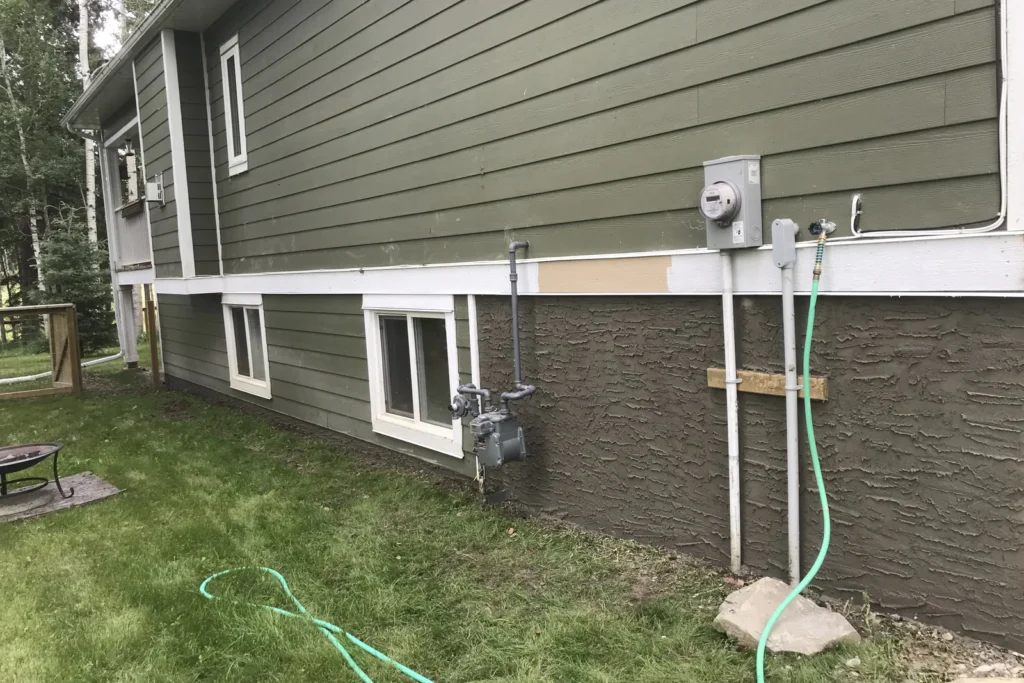
What Should I Look At Before Calling a Contractor?
You do not need to diagnose the foundation yourself. A few observations can help you describe the problem accurately.
Look for:
- Where the parging is damaged
- Whether the damage is localized or widespread
- Whether pieces are loose or already missing
- Whether there are visible cracks in the exposed foundation
- Whether the same area gets wet regularly
- Whether a downspout discharges nearby
- Whether the soil slopes toward or away from the house
- Whether the damage is concentrated near a driveway or salted walkway
- Whether there are signs of water inside the basement
Take a few photos from different distances. One close-up can show the texture of the damage, while a wider photo shows where it occurs on the foundation.
Those details can make it easier for a contractor to understand what they are looking at before an on-site inspection.
Questions to Ask a Parging Contractor
Before hiring someone, ask:
1. What caused the existing parging to fail?
The answer should be based on observations rather than a generic explanation.
2. Does the foundation underneath appear sound?
If the contractor finds cracks or deterioration, ask what they mean and whether they require separate repair.
3. How much of the existing parging needs to be removed?
There should be a reason for removing sound material.
4. What material will you use?
Ask for the product name and why it is appropriate for the substrate.
5. How will you prepare the existing surface?
Surface preparation is an important part of adhesion and long-term performance.
6. Is there a moisture or drainage issue that should be addressed first?
If water is contributing to the failure, replacing the parging alone may not solve the problem.
7. What exactly is included in the estimate?
Make sure you understand whether removal, disposal, surface repairs, preparation, materials, and finishing are included.
When Should You Repair Parging?
Consider having the damage inspected when:
- Large sections are falling away
- Cracks are spreading
- You can see deterioration in the foundation underneath
- Water is getting behind the coating
- The same area has been repaired repeatedly
- The damage extends around a large portion of the foundation
- You are concerned about a visible foundation crack
A small area of damaged parging does not necessarily require an emergency repair. But ignoring widespread deterioration can make it harder to determine what is happening underneath the coating and may allow moisture to continue affecting the surface.
Parging Repair FAQ
Is cracked parging a serious problem?
Not necessarily. Parging is generally a non-structural coating, and it can fail without significant structural damage to the foundation. However, damaged parging can expose underlying problems, so the condition of the surface underneath should be considered before repairing it.
Can I just apply new parging over the old parging?
Sometimes, but not if the existing material is loose, poorly bonded, or deteriorated. New material needs a suitable substrate. Covering failed material does not make the underlying bond stronger.
Does parging waterproof a foundation?
No. Parging can protect and finish a foundation surface, but it should not be treated as a complete waterproofing system.
Why does my parging keep cracking after it has been repaired?
Repeated failure can indicate that the underlying cause was not addressed. Possible contributors include moisture, freeze-thaw exposure, poor adhesion, unsuitable materials, movement, or inadequate surface preparation.
Do I need to replace all the parging?
Not necessarily. If most of the existing material is sound and firmly bonded, a localized repair may be appropriate. If failure is widespread, more extensive removal and replacement may be justified.
Can parging be repaired during winter in Ottawa?
It depends on the product, temperature, and installation conditions. Some products have specific requirements for cold-weather application, while others require warmer conditions. The manufacturer’s requirements should determine whether the repair can be performed safely and properly.
Is parging the same as foundation repair?
No. Parging is a surface coating. Foundation repair addresses problems with the underlying concrete, block, masonry, or foundation structure.
The Bottom Line
Damaged parging does not automatically mean you have a damaged foundation.
The useful question is not simply, “How do I replace this parging?”
It is:
“Why did it fail, and what condition is the foundation underneath it in?”
A good repair starts by identifying what is loose or deteriorated, examining the exposed surface, considering moisture and drainage conditions, and choosing a repair method that is appropriate for the existing substrate.
If the underlying foundation is sound, the solution may be a simple parging repair: removing failed areas, preparing the surface properly and applying a new coat.
If the inspection reveals a foundation crack, deteriorated concrete, drainage problem, or persistent moisture issue, that needs to be addressed as part of the overall repair rather than hidden beneath a new coating.
For Ottawa homeowners, the goal should not be to do the biggest parging job possible. It should be to find out what failed, check what is underneath it, and fix the cause where possible.
Published by Ottawa Parging Experts, a foundation parging company serving Ottawa and nearby communities. Questions about this article? Contact us.