Parging vs. Foundation Waterproofing: Which Does Your Foundation Need?
If the parging on your foundation is cracked, it is easy to assume that the foundation needs waterproofing.
That is not necessarily the case. Below, Ottawa Parging Experts explains how to tell which one your foundation needs.
Parging and waterproofing serve different purposes. Parging is a protective coating over the foundation. Waterproofing is part of a system designed to keep groundwater from getting into the basement.
The difference matters because replacing damaged parging will not fix a leaking foundation. On the other hand, digging up an entire foundation because the parging looks rough can be an expensive solution to a problem that may only require a surface repair.
The first question should always be:
Where is the water coming from?
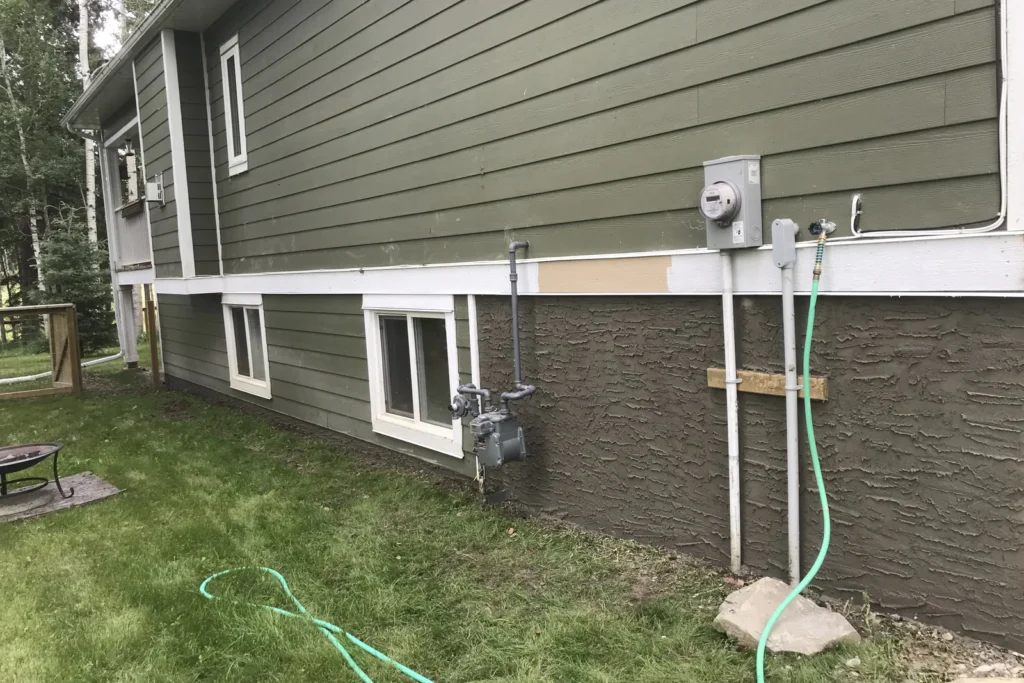
Parging and waterproofing are not the same thing
Parging is commonly applied to masonry foundation walls, particularly concrete block foundations. It provides a finished exterior surface and helps protect the masonry from weather and physical exposure.
Over time, Ottawa’s freeze-thaw cycles, moisture and salt exposure can take their toll. Parging may crack, loosen, erode or separate from the wall.
That does not automatically mean the foundation is leaking.
Waterproofing is a different job. Depending on the construction and the source of the problem, exterior waterproofing can involve excavating the foundation, repairing the wall, applying a waterproofing membrane and addressing drainage at the footing.
So if the basement is dry and the main problem is deteriorated parging, waterproofing may have nothing to do with the repair.
If water is entering the basement, the parging may be completely unrelated to the actual leak.
A simple way to tell the difference
| What you see | What it could mean |
|---|---|
| Cracked or missing parging but a dry basement | Likely a parging or masonry repair |
| White powder on the foundation wall | Moisture has been moving through the masonry |
| Water appears after heavy rain | Look at grading, downspouts, window wells and the foundation |
| Water comes through a crack | The crack and the source of water need to be investigated |
| Water appears where the wall meets the floor | Possible groundwater or drainage issue |
| Bowing wall or displaced blocks | Potential structural problem, not simply parging |
| Exterior parging looks bad but there is no interior moisture | Surface deterioration may be the only problem |
This is not a substitute for an inspection, but it is a useful starting point.
A cracked coating on a dry foundation is a very different situation from a basement that takes on water every time Ottawa gets a major rainfall.
What is parging?
Parging is a relatively thin cement-based or modified coating applied to masonry or concrete.
On an exposed foundation, it protects the underlying surface and improves its appearance. It is especially common on concrete block foundations, where the block and mortar joints would otherwise be exposed.
Parging can deteriorate for several reasons:
- Freeze-thaw cycles
- Moisture
- Salt exposure
- Poor surface preparation
- Movement in the underlying masonry
- Water getting behind the coating
- Age and general weathering
You may notice cracks, hollow-sounding areas, peeling, missing sections or exposed block.
The appearance alone does not tell you whether the foundation needs waterproofing.
One of the more important things to determine is what condition the masonry is in underneath the damaged coating.
If the coating has failed but the block is sound and the basement is dry, the repair may be relatively straightforward.
If the masonry underneath is deteriorated or water is getting through the wall, there is more to deal with.
What does waterproofing do?
Foundation waterproofing is intended to control water at the below-grade portion of the foundation.
Exterior waterproofing usually means exposing the foundation so the wall can be inspected and repaired from the outside. Depending on the condition of the wall and the existing drainage system, the work may include cleaning the foundation, repairing cracks or defects, applying a waterproofing system and addressing the footing drainage before the excavation is backfilled.
That is a considerably larger project than replacing damaged parging.
There are also interior drainage systems. These collect water that reaches the basement perimeter and direct it toward a sump or another drainage point.
The two approaches are not simply “good” and “bad” versions of the same repair.
Exterior work addresses the outside of the foundation.
An interior drainage system manages water after it has reached the inside perimeter.
Which approach makes sense depends on why the basement is getting wet and how the foundation is constructed.
Don’t assume a wet basement means the foundation needs excavation
Before recommending major waterproofing work, look at the obvious sources of water around the house.
Start with the roof.
A surprising amount of foundation moisture can be related to how rainwater is handled at the surface. Check whether the gutters are overflowing and where the downspouts discharge.
Then look at the ground around the house.
If the grade slopes toward the foundation, rainwater can collect against the wall. A downspout dumping several feet from the house can also put a large amount of water into the soil beside the foundation during a storm.
Window wells are another common place to look.
A blocked or poorly drained window well can collect water directly beside a basement window.
These are relatively simple things to investigate before assuming that the entire foundation needs to be excavated.
Of course, surface drainage is not always the answer. If the exterior drainage is working properly and water is still entering through a foundation wall, crack or floor/wall joint, the problem may be below grade.
What does efflorescence tell you?
If you see a white, chalky or powdery deposit on basement masonry, it may be efflorescence.
It happens when water moves through masonry and carries dissolved salts toward the surface. As the water evaporates, the salts are left behind.
Cleaning it off is easy.
Stopping it from coming back is the harder part.
Recurring efflorescence is a reason to investigate where the moisture is coming from. It does not automatically mean the foundation needs to be waterproofed, but it does tell you that moisture has been moving through the material.
That distinction is important.
When repairing the parging makes sense
Parging repair is often appropriate when the coating itself has deteriorated but the foundation remains sound and the basement is not experiencing a significant water problem.
A typical repair might involve removing loose material, preparing the masonry, repairing damaged areas and applying a compatible new coating.
The preparation matters.
Putting new parging directly over loose, hollow or poorly bonded material is unlikely to produce a durable result. If the underlying masonry is moving or deteriorating, that needs to be dealt with rather than simply covering it up.
It is also worth figuring out why the original parging failed.
If water is repeatedly getting behind it, for example, a new surface coat may eventually develop the same problems.
When waterproofing becomes more likely
Waterproofing becomes more relevant when there is an ongoing water problem that cannot reasonably be explained by surface drainage alone.
Examples include:
- Water entering through a foundation crack
- Repeated leakage after rain
- Persistent dampness on below-grade foundation walls
- Water appearing at the floor/wall joint
- Evidence of groundwater pressure
- A drainage system that is no longer functioning properly
- Continued leakage after gutters, downspouts and grading have been corrected
Even then, the repair should be based on the actual water path.
A contractor should be able to explain why water is getting into the basement and how the proposed repair is intended to stop or manage it.
If the explanation is simply “your foundation is old, so you need waterproofing,” ask more questions.
Exterior waterproofing or an interior drainage system?
This is one of the more complicated decisions because both approaches can be appropriate in different circumstances.
Exterior waterproofing
The major advantage of exterior work is that the foundation can be addressed before water reaches the interior.
The downside is obvious: excavation.
Depending on the property, excavation can mean removing soil, gardens, decks, walkways or other features beside the foundation. It is also generally a more involved and expensive project than an interior system.
Exterior work makes particular sense when the exterior foundation needs attention anyway, when there are significant defects in the wall, or when addressing the water from the outside is the appropriate solution for the building.
Interior drainage
An interior drainage system can be useful when excavation is impractical or when the objective is to collect and redirect water at the basement perimeter.
It can be considerably less disruptive to the property.
The tradeoff is that the foundation wall can still be exposed to exterior moisture. The system is managing the water rather than necessarily preventing it from reaching the wall.
That is why it is important to understand what problem the system is actually solving.
Neither approach should be sold as a universal answer for every wet basement.
What about concrete block foundations?
This is where the distinction between parging and waterproofing becomes particularly important.
Concrete block foundations are made from individual masonry units and mortar joints. Water can move through the block itself or through the joints.
If the exterior parging is failing, the condition of those blocks matters.
A few cracked areas in otherwise sound masonry are one thing. Significant deterioration, displaced blocks or a wall that is bowing is something else entirely.
A structural problem should not be covered up with new parging.
Likewise, a water problem inside the basement should not automatically be treated as a cosmetic coating problem outside.
Ottawa weather is hard on foundation coatings
There is nothing unusual about seeing deteriorated parging on an older Ottawa home.
The combination of moisture, freezing temperatures, repeated freeze-thaw cycles and de-icing salt can be hard on exterior masonry.
Water gets into small cracks and pores. When it freezes, it expands. Repeated cycles can gradually loosen the coating and contribute to surface deterioration.
Salt can add another source of damage, particularly around driveways and walkways.
That does not mean every damaged section needs to be completely replaced.
The more useful questions are:
How much of the coating has failed?
Is the masonry underneath still sound?
Is water getting behind the coating?
Is there a separate basement moisture problem?
Those answers tell you considerably more than the appearance of the parging by itself.
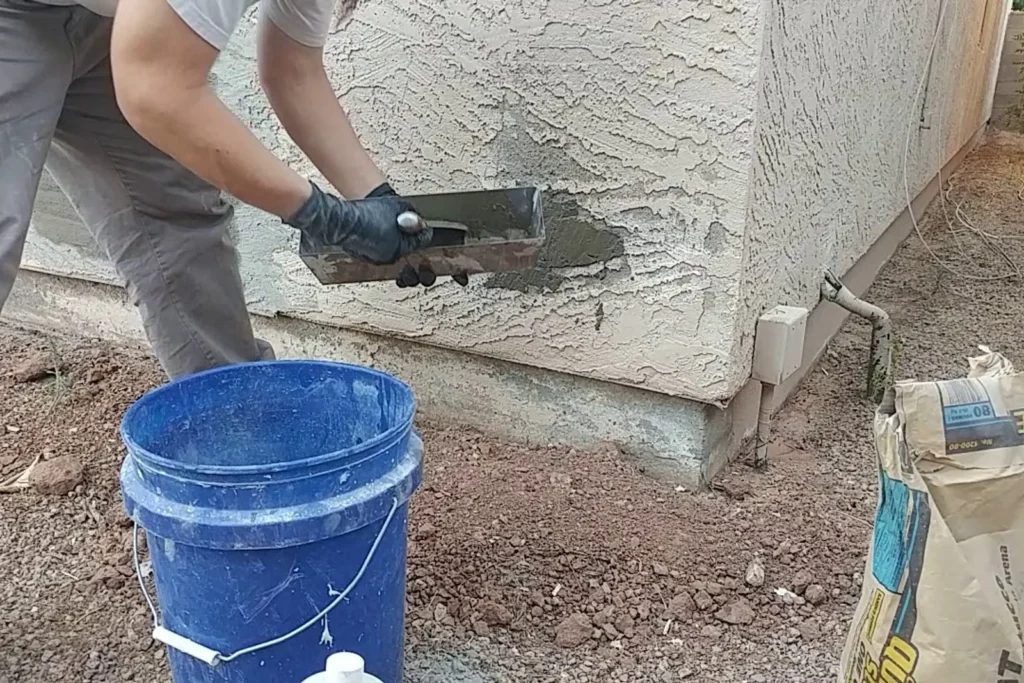
What should you check before calling a contractor?
If you are trying to understand a foundation problem, spend a little time observing what happens during and after rain.
Outside, look at:
- Downspout discharge locations
- Gutters that overflow
- Ground that slopes toward the house
- Standing water near the foundation
- Window wells
- Visible cracks
- Missing or badly deteriorated parging
Inside the basement, look for:
- Water stains
- Active leaks
- Efflorescence
- Damp areas
- Cracks
- Water at the floor/wall joint
- Musty areas that become noticeably worse after rain
If possible, take photographs when the problem is happening.
A dry basement in August tells you less than a basement photographed during a major rainfall.
The timing of the leak can be useful information.
When the problem may be structural
Some foundation problems should not be treated as waterproofing or parging problems at all.
Get the foundation assessed appropriately if you see:
- Significant horizontal cracking
- A bowing or leaning wall
- Displaced concrete blocks
- Large cracks that appear to be changing
- Major deterioration of masonry
- Movement around basement windows or doors
- Settlement accompanied by substantial cracking
Waterproofing a structurally compromised wall does not fix the structural problem.
Likewise, new parging can hide deterioration without addressing why the wall is moving.
If there is evidence of structural movement, that issue should be dealt with before cosmetic work.
How much do parging and waterproofing cost?
There is no useful universal price for “parging” or “waterproofing.”
The scope can range from repairing a small section of damaged coating to excavating a large portion of the foundation and rebuilding the associated drainage system.
Cost can depend on:
- Length of foundation being repaired
- Height and condition of the wall
- Type of foundation
- Amount of preparation required
- Accessibility
- Landscaping and other obstructions
- Required excavation
- Drainage conditions
- Crack or masonry repairs
- Waterproofing system selected
A small parging repair and a full exterior waterproofing project are not comparable jobs.
If a contractor gives you a recommendation, ask for a written scope that explains what is actually being repaired.
Questions worth asking a foundation contractor
Before agreeing to a major repair, ask a few straightforward questions:
- What is causing the moisture?
- Where do you believe the water is entering?
- Is the foundation itself damaged, or is the parging the main problem?
- What did you find that makes waterproofing necessary?
- Could grading, gutters or downspouts be contributing?
- What condition is the existing drainage system in?
- Why are you recommending exterior work rather than an interior solution, or vice versa?
- What happens if we repair the parging without waterproofing?
- Is there any evidence of structural movement?
- What exactly is included in the proposed repair?
A good contractor should be able to answer these questions without turning the conversation into a sales pitch.
You do not necessarily need the cheapest repair. You need to understand what problem you are paying to fix.
Frequently asked questions
Does parging waterproof a foundation?
No. Parging is a protective surface coating. It should not be treated as a substitute for a below-grade waterproofing and drainage system.
Can new parging stop a basement leak?
Not reliably. If water is entering through the foundation, the source of that water needs to be identified first.
Does efflorescence mean I need waterproofing?
No. It means moisture has moved through the masonry and deposited salts at the surface. The source of the moisture still needs to be determined.
Does every foundation crack need waterproofing?
No. Foundation cracks vary considerably. Their size, location, movement and relationship to the water problem all matter.
Should grading and downspouts be checked before waterproofing?
Yes. They are relatively simple sources of foundation moisture to investigate before moving on to more extensive work.
Is exterior waterproofing better than interior drainage?
Not automatically. They manage water in different ways. The right approach depends on the building, foundation and source of the water.
Is acrylic or polymer-modified parging better than traditional cement parging?
Not necessarily. The appropriate material depends on the substrate, exposure, existing materials and installation. Material selection cannot compensate for poor preparation or an unresolved moisture problem.
How long does parging last?
There is no dependable universal lifespan. Installation quality, moisture, freeze-thaw exposure, salt, substrate condition and maintenance all affect its service life.
The bottom line
Cracked parging does not automatically mean you need foundation waterproofing.
If the basement is dry and the foundation masonry is sound, the problem may simply be deteriorated exterior coating.
If water is getting into the basement, start by figuring out where it is coming from. Look at grading, gutters, downspouts and window wells before assuming that excavation is necessary. If those factors are not responsible, the foundation, cracks and drainage system may need closer investigation.
And if the wall is bowing, the masonry is displaced or there are signs of significant movement, treat that as a potential structural problem rather than a parging problem.
The most useful question to ask a contractor is not “How much does waterproofing cost?”
It is:
“What is causing the water or foundation deterioration, and how does this repair fix that specific problem?”
If the answer is clear, specific and supported by what they found during the inspection, you are in a much better position to decide what work actually needs to be done.
Published by Ottawa Parging Experts, a foundation parging company serving Ottawa and nearby communities. Questions about this article? Contact us.